Research
Remote Sensing of Greenhouse Gas & Pollutant Point Sources
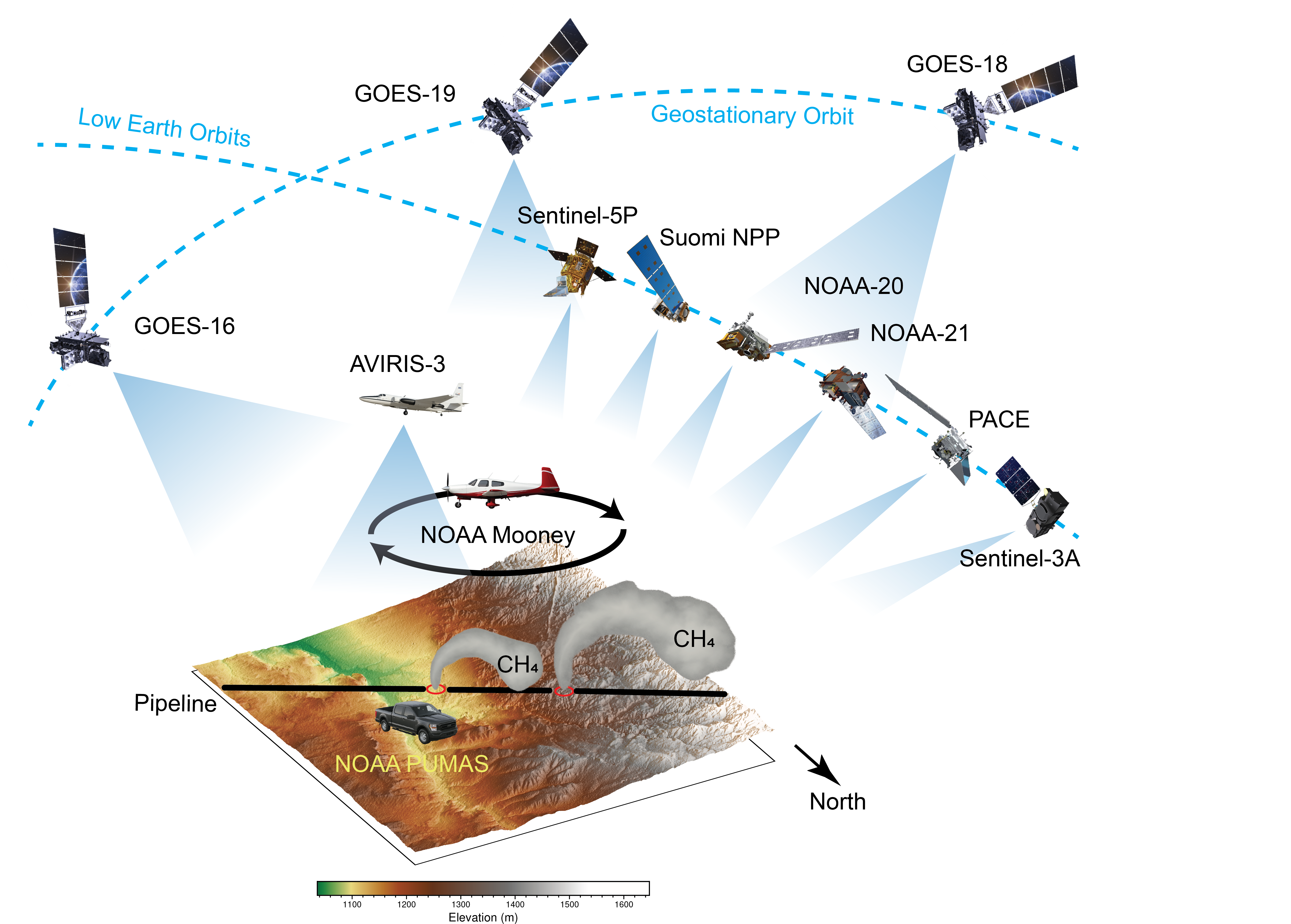
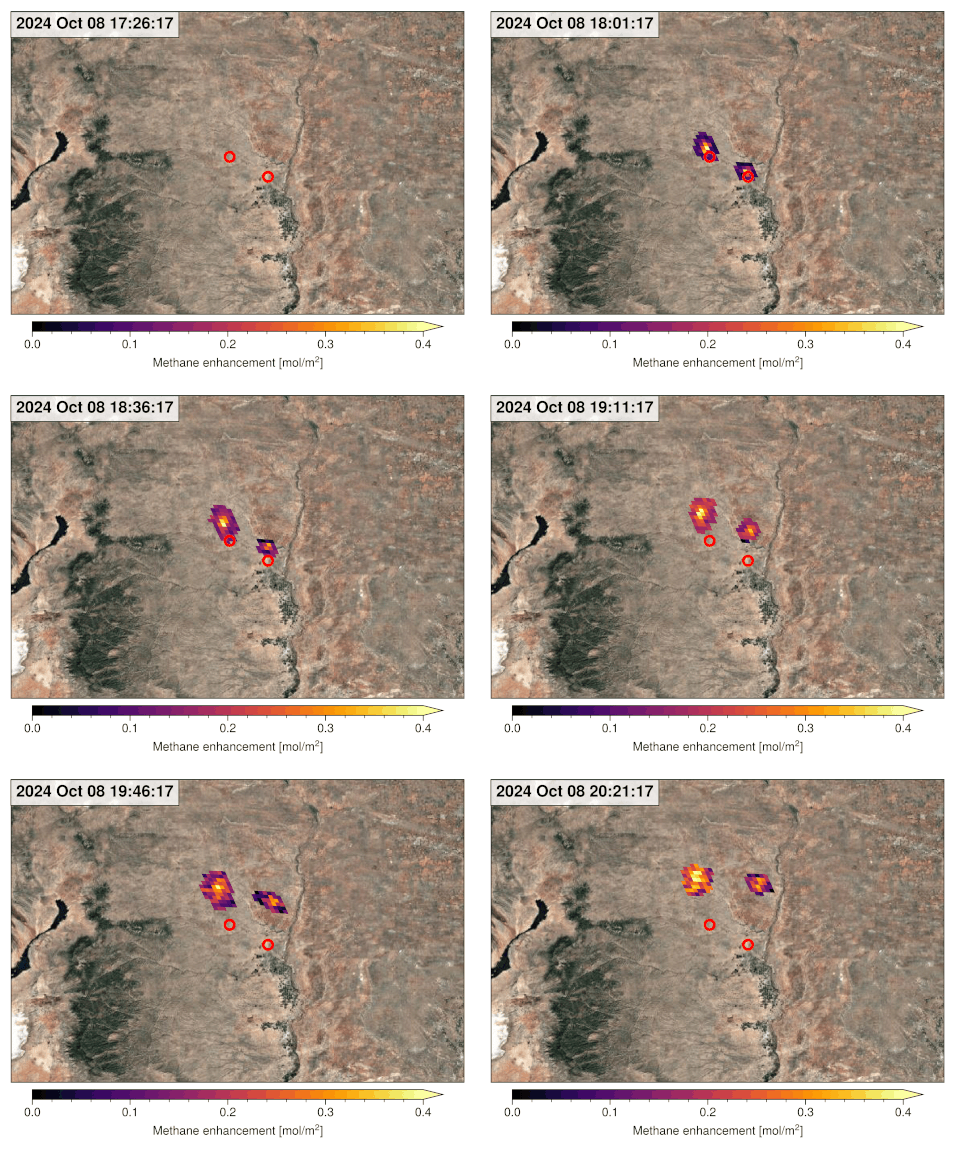
I use AI and satellite remote sensing to detect and quantify facility-level emissions of greenhouse gases and air pollutants. My work spans from algorithm development to addressing scientific questions, such as:
- What is the role of industrial point sources in driving methane's rise since the 1980s?
- What physical and operational factors govern leakage-related methane emissions?
- Can we realize near real-time monitoring of leakages and prevent them using AI-based forecasting systems?
Related publications: He et al. 2024, PNAS; He et al., 2026, under review
Inverse Modeling of Air Quality and GHG Emissions
I develop inverse modeling frameworks to quantify emissions of greenhouse gases and air pollutants by integrating observations from satellites, ground-based monitoring networks, and other measurement platforms. These methods provide top-down constraints on emissions and improve our understanding of their sources, variability, and impacts on atmospheric composition and air quality.
Related publications: He et al. 2022b, ACP; He and Dadheech et al. 2025a, GMD; He and Dadheech et al. 2025b, ACP
AI Emulators for Surrogate Modeling
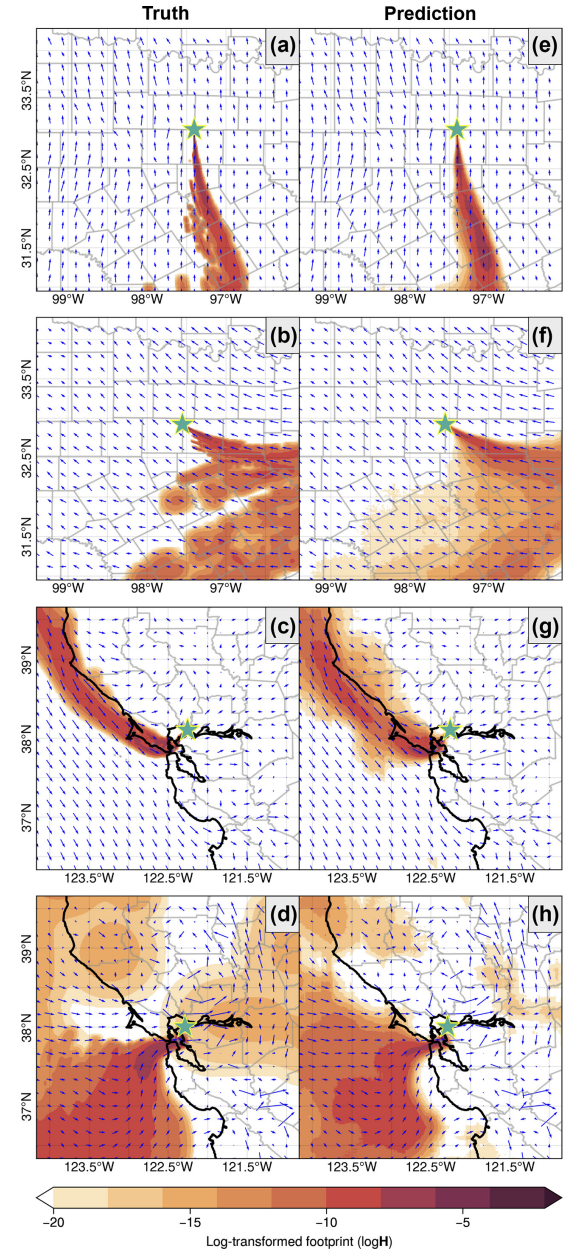
Transport and chemical modules are major computational bottlenecks in atmospheric chemistry models. I develop AI emulators as fast and accurate surrogates for these modules, with a focus on accelerating simulations of atmospheric chemistry relevant to air quality. These approaches enable substantial gains in computational efficiency while allowing models to run at higher spatial resolution or with expanded chemical complexity.
Related publications: He et al. 2022a, JGR: Atmospheres; Han and He et al. 2022, GMD; Han and He et al. 2023, GRL
AI Applications for Earth Science
I am broadly interested in applying AI/ML to Earth system science, particularly in problems where physical constraints and data-driven approaches can be combined.
Related publications: Zemskova et al. 2022, Nature Communications